
Focus
Focus on… Utopias and Dystopias
The word Dystopia was coined when John Stuart Mill, added the prefix ‘dys’, meaning ‘bad’ to utopia, to create the idea of a perfect world gone bad. […]

The word Dystopia was coined when John Stuart Mill, added the prefix ‘dys’, meaning ‘bad’ to utopia, to create the idea of a perfect world gone bad. […]

[Editor’s note – Speculative Optimism is a Ludogogy project – open to all. The idea is to use techniques of futures thinking, particularly foresight, and creativity to, first, deliver a book of optimistic speculative fiction, […]

Our current volatile reality provides us with opportunities to build a new, better future. Three possible future scenarios are presented here. […]

[Editor’s note -The Speculative Optimism project was launched in February. The first phase of the project is to produce a book of optimistic speculative fiction – and later there will be a collaborative community space […]
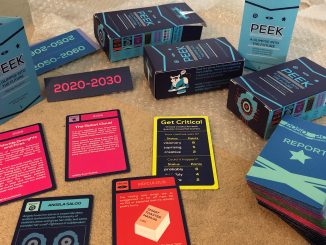
This article looks at how science fiction storytelling can be used as a technique in gaming. Specifically, we look at how plot prompts can be used alongside characters and situations to help players intuitively craft […]
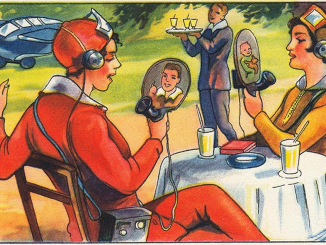
The perspective of a French Economics, Social Sciences and Management teacher Expressing a vision of the future is taking a risk. Nevertheless, it’s useful to imagine what where the underlying and powerful trends of today […]

What will people want to play in 2040? As a futurist, I rely heavily on a skill called Scanning. Scanning is how we start to know the future and begin to expand our time horizon. […]
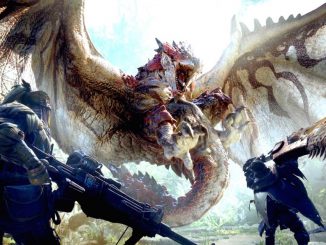
I have always subscribed to the idea that almost every game has something to teach you as you play it. Whether it is sharing a philosophical world view with games like ‘Spec Ops: The Line’(YAGER […]

Living Complexity is described by its author, Luca Minudel, as a catalogue of practices for use within teams, with an eye also at the broader organisation. […]

Victor Motti’s book, ‘A Transformation Journey to Creative and Alternative Planetary Futures’, embodies a heartfelt plea for the creation of a planetary-wide consciousness, which the author (probably quite rightly) believes is our best hope for […]
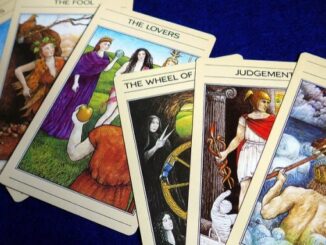
There is however another class of ‘games’, made up of generic components and concepts , which therefore allow an almost infinite number of possibilities in play […]
One of the main aspects of games that tends to be overlooked by most people when you approach them with the idea of utilising games as a teaching or training tool is the freedom to […]
The following is a chapter from an upcoming book by David Chandross, whom many of you will know from his fascinating posts on LinkedIn, and others from his academic publications. David is a big-hitter in […]

There are a number of ways in which games can be classified or described as systems. In regard to their composition, they can be seen as collections of inter-related parts; rules, mechanisms, physical components and […]

Nowadays, when most people hear the term ‘Cybernetics’ they will tend to associate it with computer technology, possibly in a sci-fi or futuristic context. However, the term existed well before the age of digital computing. […]
Ludogogy 2025